
No, No - That's Not a Gantt Chart, It's... an Asana Timeline
The "adaptive" project manager's quest for sanity...
Niamh McNally
3 min read
Project managers working in tech-oriented environments often find themselves walking a tightrope between two very different worlds: the agile, iterative mindset of development teams and the structured, predictive expectations of leadership. It’s a balance between adaptability and structure, between responding to change and providing clarity, between team autonomy and executive confidence.
One of the clearest manifestations of this challenge is how project status is communicated. For many agile tech teams, tools like Asana, Jira or Trello reflect the reality of their work: fluid, sprint-based and responsive to new insights. For leadership, however, progress often needs to be mapped in terms of milestones, dependencies and risk management, making the classic Gantt chart a form of reassurance. This is where the challenge arises.
The Translation Layer
A PM in this space doesn’t just manage projects; they translate between two fundamentally different ways of seeing work. The development team thrives in a world where priorities shift based on user feedback and new discoveries, where detailed upfront planning feels outdated. Executives and senior stakeholders operate on a different wavelength, where long-term vision, business cases and commitments to customers or investors demand structured planning, timelines and deliverables that don’t change with every sprint.
When an engineering team says, "We’re iterating toward the best solution," leadership hears, "We don’t have a plan." When leadership asks for a firm deadline, engineers often hear, "We don’t care about doing this right." Left unmanaged, both sides grow frustrated and start to question the other’s grasp of reality. A PM’s job is to bridge that gap, ensuring that both sides feel heard, respected and set up for success. At the end of the day, everyone has a job to do, and most would prefer to do it with the least arbitrary bureaucracy and as few meetings as possible. As a project manager, I get great satisfaction out of being that buffer slash translator, and facilitating others to do great work.
Walking the Tightrope
So how do you balance these competing perspectives without constantly firefighting? A few key strategies help PMs navigate this delicate terrain:
Context Switching Without Losing Integrity
The best PMs understand that the way they communicate needs to shift based on the audience. With engineers, it’s about the problem space, constraints and trade-offs. With leadership, it’s about impact, risk and delivery confidence. The key is never to misrepresent reality. Translating doesn’t mean distorting.Building Trust on Both Sides
If a PM only caters to leadership’s expectations, teams start to see them as an enforcer rather than an enabler. If they only align with the development team, leadership starts to see them as disconnected from business realities. A great PM builds credibility by advocating for both sides and ensuring that decisions reflect both strategic goals and operational needs.Presenting Multiple Truths
The work is both structured and adaptive. A project roadmap should be a living document, not a rigid prediction. Communicating in a way that allows leadership to see structured progress while keeping agility intact requires smart reporting, using multiple formats such as dashboards, burndown charts and executive summaries to suit different stakeholders.Anticipating the "When Will It Be Done?" Question
A PM who gets ahead of this inevitable conversation is always in a better position. Instead of letting leadership define deadlines in a vacuum, proactively offer projections based on velocity and dependencies while setting expectations that those dates are guides, not guarantees.
The Value of a Steady Hand
At its core, this role is about creating clarity where there is complexity. It ensures that engineers feel empowered to do their best work without being micromanaged, while leadership has confidence that work is moving in the right direction. It's not about choosing a side but about holding space for both ways of thinking to coexist productively.
So the next time someone asks for a critical path or Gantt chart, but your team is working in sprints, remember: your job isn’t to fight against either perspective, but to build the bridge that allows both to thrive.

"Estimates are fiiiine... As long as they're right"
tl;dv nailing it, as always.
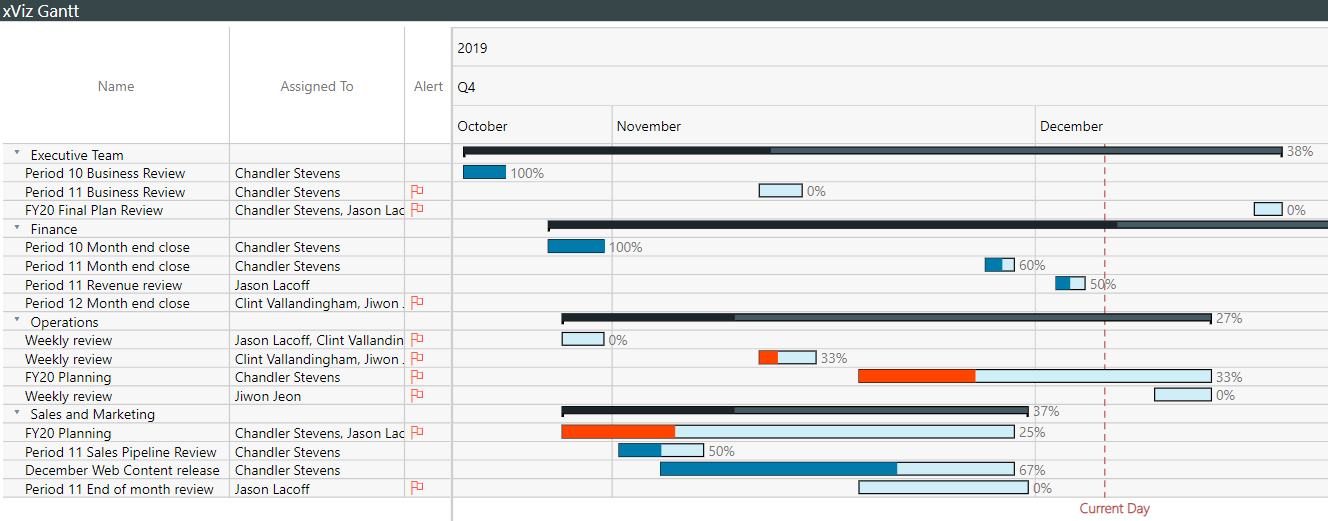
What if I told you I'm not crazy about them either?